"You can make a logo in ten minutes with AI" is something I hear more and more often. And it's true — you can. Just as it's true that you can cook pasta with tomato sauce in ten minutes or in ten hours. The result is different. The
A professional logo from a freelancer usually costs €300–1,500; a complete brand identity €800–3,000 with a freelancer and €2,500–8,000 with an agency. My logo and essentials package starts at €800 and includes vector files, variants and a colour palette: everything you need to actually use it. See the packages.
Sources: Lindgaard et al. (2006); Stanford Web Credibility Project (2002)
Logo vs brand identity: they're not the same thing
Before talking about prices, it's essential to distinguish these two things — they're often confused in quotes and in conversations with clients.
What a logo is
The logo is the graphic symbol that identifies a company, product or service. It can be a pictogram (a graphic shape without text), a logotype (just the name written in a specific typeface) or a combination of both. The logo is a file — but the file is the output of a research and design process that defines the right symbol for that specific brand, not the first pleasant idea that comes to mind.
What a brand identity is
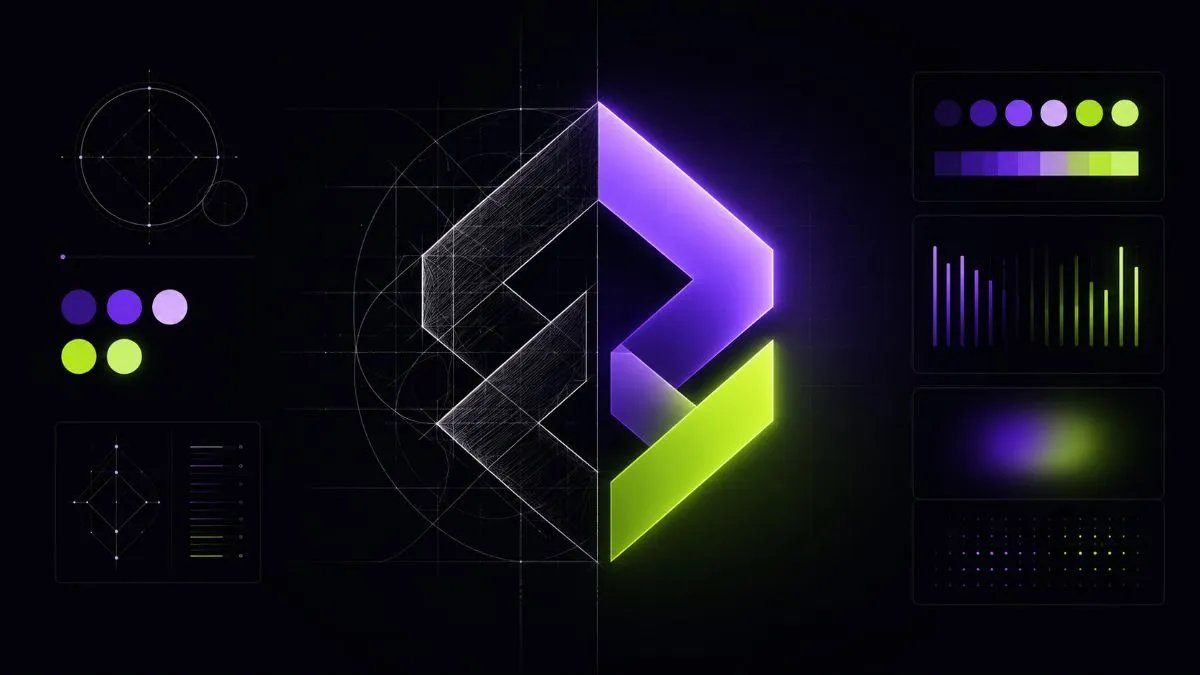
The brand identity is the complete visual system: the logo (with all its variants), the colour palette (primary, secondary, neutral), typography (primary and secondary typefaces, hierarchy), iconography (icon style), photography (tone and style of images) and the brand manual (the document that defines how to use all these elements consistently). A solid brand identity ensures that every brand touchpoint — website, business card, packaging, social media — communicates recognisably and consistently without having to reinvent the choices every time.
How much does a logo cost: the price ranges
The logo design market is one of the most fragmented. There are options at every price, and almost all of them are "justified" by the value they offer at that price. The right question isn't "how much does it cost?" but "what should I expect at this price?"
Automatic AI generators (€0–30)
Tools such as Looka, Canva Logo Maker and Hatchful generate logos in seconds from a prompt. The cost is almost zero — but the result is a generic logo built on templates, not a visual identity built on your brand. It works for temporary projects, product tests or very informal businesses. For a professional business that wants to build recognition over time, it isn't the right starting point.
Competitive design platforms (€200–600)
Platforms such as 99designs let you launch a contest in which several designers propose concepts — you only pay the winner. The advantage is having more options to choose from. The disadvantage: designers who take part in low-budget contests rarely invest in the strategic process. The result is often an aesthetically pleasing logo that isn't rooted in an understanding of the brand.
Freelance designers (€300–1,500)
A freelancer with a solid portfolio and a structured process is the best choice for the vast majority of projects. The typical process includes:
A complete brand identity with a freelancer (€800–3,000)
A complete brand identity package includes the logo + variants, a colour palette with exact codes (HEX, RGB, CMYK, Pantone), a typeface selection with licensing, basic iconography and a PDF brand manual. This is the ideal solution for start-ups, small businesses and professionals who want to build a solid visual identity that can be applied across every channel.
A brand identity with an agency (€2,500–8,000+)
A structured agency also brings pre-design strategic work to the process: positioning analysis, competitor research, defining the tone of voice and brand strategy. The result is a more solid visual system, because it's rooted in conscious strategic choices. The higher costs also reflect the company structure — project manager, art director, copywriter, account manager.
How a professional design process works
Understanding the phases of a professional design process helps you assess quotes and understand why two proposals at the same price can produce very different results.
Phase 1 — Brief and discovery
The brief is the most important phase of the process — not the drawing. A good designer spends 2–4 hours on the brief alone: the brand's story, core values, target audience, competitors to analyse, visual aspirations and the contexts in which the logo will be used. A superficial brief leads to a superficial logo. If the designer doesn't ask in-depth questions, that's a warning sign.
Phase 2 — Research and moodboard
The designer analyses the sector, the competitors and relevant visual trends, and gathers stylistic references. The moodboard isn't the final design — it's the visual territory that client and designer define together as a starting point. This phase avoids the most costly misunderstandings: agreeing on the visual direction before drawing saves weeks of revisions.
Phase 3 — Concepts and proposals
The designer presents 2–3 distinct creative directions — not variants of the same idea. Each concept has a rationale: why that shape, that colour, that typeface. A professional can explain their choices — they don't simply propose "what looks nice to them". The client chooses a direction and the designer develops it in the next phase.
Phase 4 — Refinement and delivery
The chosen concept is refined in detail: proportions, weights, spacing, colour variants. Practical applications are tested — the logo on a dark background, at small sizes, in black and white, as a favicon. At the end, the client receives the files in every format they need and, if included, the brand manual.
- An early-stage project or an MVP to test
- A limited budget (under €600)
- A local business with a mainly offline presence
- The site and materials are handled with existing templates
- Launching a brand that's meant to grow
- A presence across several channels (web, social, print, packaging)
- A team that needs to use the brand independently
- The design will be the basis for the site and communications for years
The brand manual: what it is and why it's essential
The brand manual (or brand guidelines) is the document that defines the rules for using every element of the visual identity. It isn't optional — it's what guarantees the brand stays consistent over time, even when it's used by different people (collaborators, agencies, printers).
What a professional brand manual contains
- Logo and variants: horizontal and square versions, standalone icon; colour, white and black versions; minimum clear space around the logo.
- Incorrect logo use: explicit examples of what not to do — distortions, unauthorised colours, disallowed backgrounds.
- Colour palette: primary and secondary colours with every code (HEX, RGB, CMYK, Pantone). Rules for using combinations.
- Typography: primary typeface (headings), secondary typeface (body), permitted weights, spacing, minimum sizes.
- Iconography: icon style (outline, filled, stroke weight), construction grid, examples.
- Photography: tone and style of images, preferred subjects, colour treatments, what to avoid.
- Applications: examples of use on business cards, letterhead, email signatures and social media templates.
Common mistakes when buying a logo
Brand identity and website: how they connect
A well-structured visual identity makes developing the website faster, more consistent and cheaper. The site's designer has exact colours, chosen typefaces and clear rules — instead of having to interpret or reinvent the brand. Working in sequence — brand identity first, then the website — is almost always more efficient than developing the two in parallel.
If you're planning both a visual identity and a new brand identity project integrated with your site, consider giving them to a single professional or studio — consistency between brand and digital is much easier to guarantee. An initial strategic consultation can help you define the right order of investment — from brand identity to the website to content strategy.
Logos and AI: what's changing in the design market
Artificial intelligence has changed the design market quickly and permanently. Tools such as Midjourney, DALL-E and Adobe Firefly generate high-quality images in seconds. It's worth understanding what they can — and can't — do, so you can assess quotes with up-to-date knowledge.
What AI can do in logo design
AI tools generate visual variations very quickly, let you explore different stylistic directions in a few minutes and lower the cost of the creative exploration phase. Some designers integrate them into their process for the moodboard phase or to generate graphic inspiration — reducing timescales without compromising the quality of the final result. A designer who uses AI intelligently in their process isn't less professional — they're more efficient.
What AI can't do
AI doesn't understand your brand. It doesn't know why you chose that name, what values you want to communicate, who your target audience is or how your competitors position themselves visually. It generates output based on statistical patterns — not strategic reasoning. A logo generated by AI without a brand-thinking process may be aesthetically acceptable but strategically empty. It may even be identical to something another company already has — because the AI learned from the same data for everyone.
How it affects prices
AI has lowered the cost of the exploratory phases of design but hasn't wiped out the value of strategic work. Designers who limit themselves to graphic execution have seen their hourly rates fall — competition with automatic tools is real at that level. Designers who offer process, brand strategy and consultancy maintain their rates because they offer something AI doesn't replicate. When assessing a logo quote, the question to ask isn't "does this designer use AI?" but "does this designer understand my brand and can they explain their choices?"
How to assess a design portfolio before choosing
The portfolio is the most reliable tool for assessing a designer — far more than testimonials or reviews. Looking at it properly means going beyond personal taste and looking for specific signs of professional quality.
What to look for in a portfolio
A consistent process — the best work shows the before and after, or at least explains the choices made. A variety of sectors — a designer who has only worked in food or only in tech may not have the right tools for your specific sector. Solid variants — do the logos work on a dark background? At small sizes? In black and white? If the portfolio only shows the main version on a white background, that's a sign of superficial presentation. Real applications — business cards, website mock-ups, packaging: seeing how the logo works in real contexts is worth more than any isolated rendering.
The questions to ask the designer
Before confirming the job, ask:
The revision process: how many changes are included
One of the aspects most often left unclear in design quotes is how many revisions are included — and what happens if you want to change direction completely after already approving a concept.
Industry standards on revisions
A professional contract typically includes: 2–3 initial concepts (distinct creative directions), 2 rounds of revisions on the chosen concept and final delivery. Changes beyond this scope are billed separately — usually by the hour (€40–80/hour for a good-quality freelancer). This is reasonable: changing your mind completely after approving a direction is a change of project, not a revision.
How to avoid endless revisions
Endless revisions (the project that never ends because the client keeps asking for small changes) are the most common problem in design. You avoid them with a precise brief at the start, structured written feedback (not spoken, not by voice message), a clear decision-making process (who has the final say) and the awareness that design doesn't always please at first sight — but it should be judged on how well it works for the target audience, not on how much the person commissioning it personally likes it. A
Practical applications of the visual identity: where it's used
A visual identity doesn't just live on a business card — it extends to every point of contact between the brand and its audience. Understanding where it will be used helps you define how complete the package needs to be and, as a result, the right budget.
- Digital: website (favicon, header logo, design system colours), social profiles (profile image, cover images, post templates), email signature, company presentations, newsletters.
- Print: business cards, letterhead, company folders, brochures, catalogues, posters, trade fair banners.
- Packaging: product labels, boxes, shopping bags, e-commerce packaging (shipping box, tissue paper, a card included with the order).
- Physical environment: signage, window graphics, embroidered or printed uniforms, branded vehicles.
- Merchandise: gadgets, clothing, branded stationery.
Not every application is needed by every business. Defining which contexts are a priority helps you work out which type of package — logo only, a basic brand kit or a complete brand identity — best suits your current situation.
The right investment in brand identity isn't the one that seems affordable today — it's the one you won't have to redo in two years.
If you want to apply this to your own project, take a look at my logo design and brand identity service: clear prices from €800, a free quote and a reply within 24 hours.